
2026-2027 Cohort
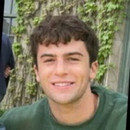
Evan Horvath
Evan Horvath is a PhD student in Biomedical Engineering at Northwestern University in Dr. Colin Hisey's laboratory. He earned his BS in Biomedical Engineering with a minor in Mathematics from Boston University, graduating summa cum laude and as a member of the Kilachand Honors College. Evan's research focuses on the intersection of biofilms, extracellular vesicles, and antimicrobial resistance. His current work centers on developing microphysiological biofilm models to isolate and characterize bacterial extracellular vesicles and investigate their roles in biofilm-associated infections. Prior to joining Northwestern, he conducted computational and experimental research on biofilm formation and antimicrobial resistance. He is also an American Society of Microbiology Future Leaders Mentorship Fellow.
As a RE-Training trainee, Evan is developing microfluidic platforms that recreate physiologically relevant biofilm environments to better understand how bacterial extracellular vesicles contribute to infection persistence and treatment resistance. Through mentorship from Drs. Colin Hisey, Erica Hartmann, and Mehreen Arshad, he is combining engineering, microbiology, and clinical infectious disease expertise to advance translational approaches for preventing and treating implant- and wound-associated infections. His long-term goal is to become a professor leading an interdisciplinary research program focused on combating antimicrobial resistance and improving global health through innovative biomedical technologies.

Alina Renli
Alina Renli is a PhD student in Biomedical Engineering at Northwestern University whose research integrates regenerative engineering, implantable bioelectronics, cardiovascular electrophysiology, and computational neuroscience. Working in the laboratory of Dr. John Rogers, Alina is developing flexible, tissue-integrated bioelectronic systems for multimodal sensing and targeted neuromodulation across the brain, intrinsic cardiac nervous system, and heart. This work focuses on improving the detection and treatment of cardiac arrhythmias, including catecholaminergic polymorphic ventricular tachycardia, through implantable devices that combine physiological monitoring, wireless optogenetic and chemogenetic stimulation, and AI-guided closed-loop control. By incorporating bioactive materials, immunomodulatory strategies, and mechanically compliant device architectures, Alina aims to reduce inflammation and fibrotic encapsulation while promoting favorable tissue remodeling and long-term host-device integration. The broader goal of this research is to establish regenerative bioelectronic approaches that restore neurocardiac stability and advance personalized therapies for cardiovascular and neurological diseases.
Alina earned her undergraduate degree from Michigan State University Honors College, completing studies in computational neuroscience, electrical engineering, and psychology with extensive training in mathematics, physics, neural engineering, physiology, programming, and biomedical data analysis. Before beginning doctoral studies at Northwestern, she conducted research through Michigan State University’s Cognitive Imaging Research Center and the Michigan Alzheimer’s Disease Research Center, applying machine learning and computational modeling to EEG and fMRI data to investigate brain connectivity and develop biomarkers for mild cognitive impairment and Alzheimer’s disease. Alina has also received training in chromatin imaging, cellular rejuvenation, cardiovascular electrophysiology, preclinical animal models, and the molecular and histological evaluation of cardiovascular disease. Her work in the RE-Training program is undertaken in collaboration with the mentor team of Dr. John Rogers, Dr. Igor Efimov, and Dr. Anna Pfenniger.